The Rent Layer
The GPU is the collateral. The customer is the credit.
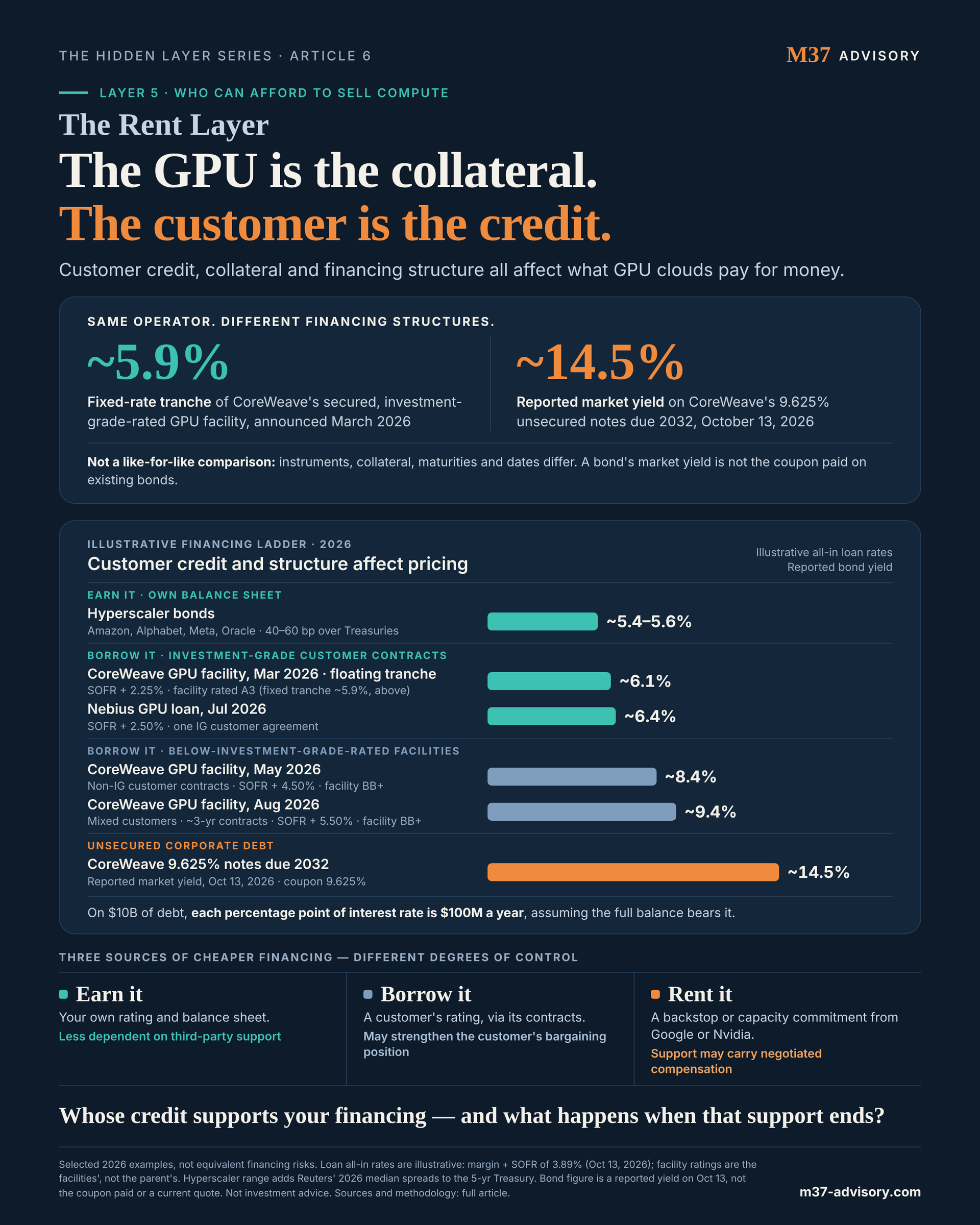
Two GPU clouds can rent out similar hardware and still have very different economics.
One reason: the cost of the money used to buy the GPUs.
18 min read 6th article in a series exploring the AI Value Map
The Rent Layer:
Who Can Afford to Sell Compute
In March 2026, CoreWeave arranged GPU-backed financing at an indicative fixed rate of about 5.9%, supported by an investment-grade customer contract.
On October 13, its unsecured 2032 notes were reported at a market yield of about 14.5%.
They aren’t like-for-like: collateral, maturity and timing differ. But the pattern is clear. The credit behind the contract can change the cost of financing the GPUs.
A GPU cloud can get cheaper money three ways:
→ Earn it: its own rating and balance sheet
→ Borrow it: a customer’s credit, through its contracts
→ Rent it: a stronger company’s backstop
Only the first belongs to the company. The other two can be withdrawn.
Article 6 of The Hidden Layer Series, “The Rent Layer,” follows the money behind the GPUs, with four risk questions and predictions.
Four questions to ask (the Rent-Risk Test):
- Whose credit is the money priced on?
- How many years does the debt outlast the contract?
- What evidence supports the hardware’s assumed life?
- When does the debt need the market again?
Full article and sources in the comments.
Analysis, not investment advice.