The Price of the Queue: Who Gets Energized First, and Who Pays
The Price of the Queue: Who Gets Energized First, and Who Pays
Why the rules of the grid, not just its physics, may decide where AI gets built
18 min read 5th article in a series exploring the AI Value Map
The Price of the Queue
AI’s power problem isn’t only physics. It’s the rules that decide who gets connected, on what terms, and who pays. The Hidden Layer series investigates where value is migrating along the AI Value Map.
The Rationed Access
Power isn’t sold to the highest bidder. It’s allocated to whoever can carry the rules.
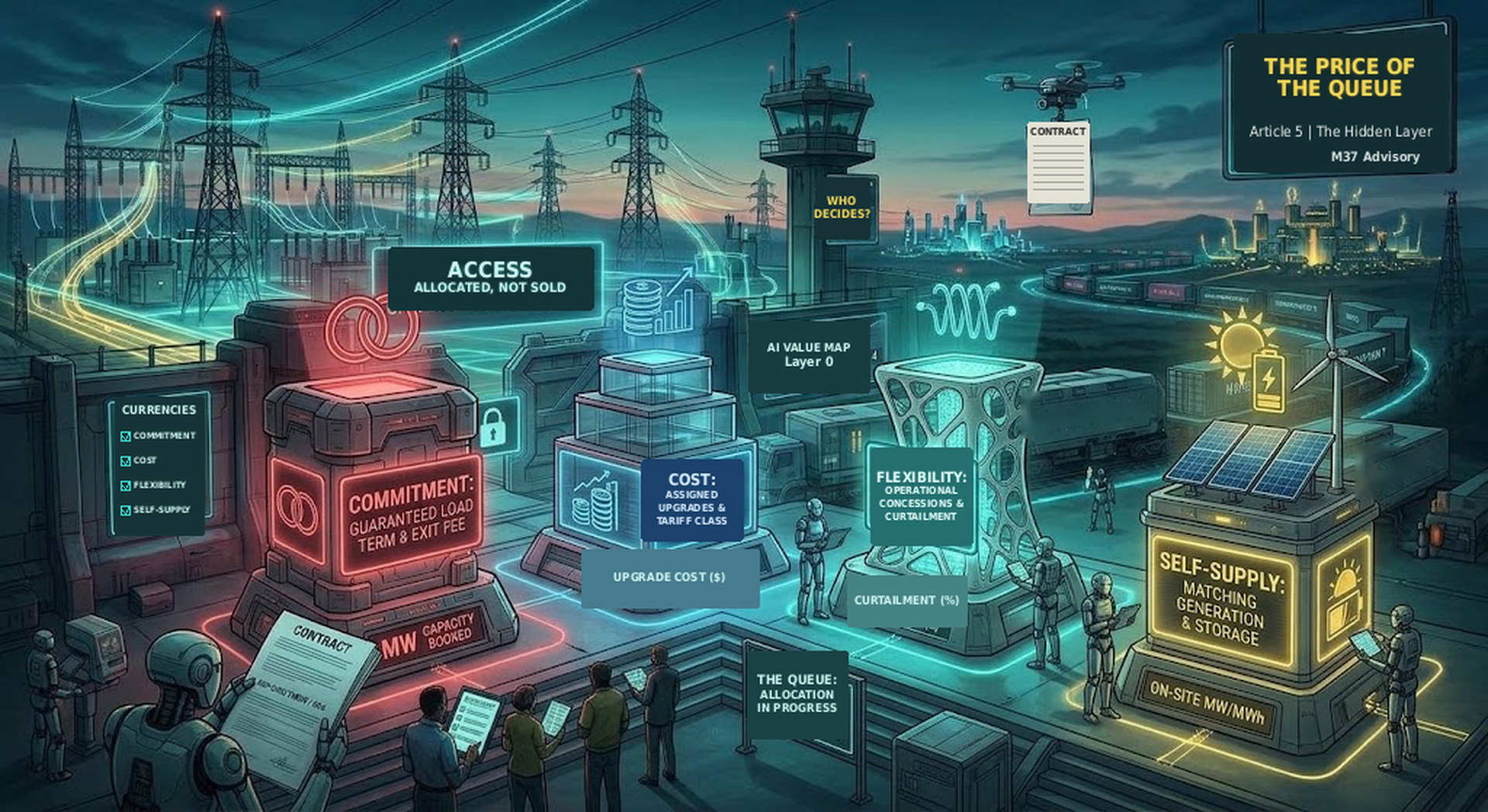
Illustration of four grid-access gates labeled Commitment, Cost, Flexibility and Self-Supply, with a queue of people waiting for power allocation.
Key takeaways
- Why first come, first served is no longer enough, and why a place in line must now be earned with evidence, money and readiness.
- The four burdens of access: commitment, cost, flexibility and self-supply. Why they aren’t four prices for the same thing, and why none guarantees an earlier connection.
- Who controls access: federal regulators, grid operators, states and utilities each hold part of the key, and the rules differ sharply from Texas to Virginia, Ohio, Ireland and the Netherlands.
- The queue-risk test: four questions on eligibility, capital at risk, time to power and operating terms to ask before committing capital to AI infrastructure.
- Public predictions to be scored in October 2028, including a separate test of whether the new rules concentrate capacity in the strongest balance sheets.

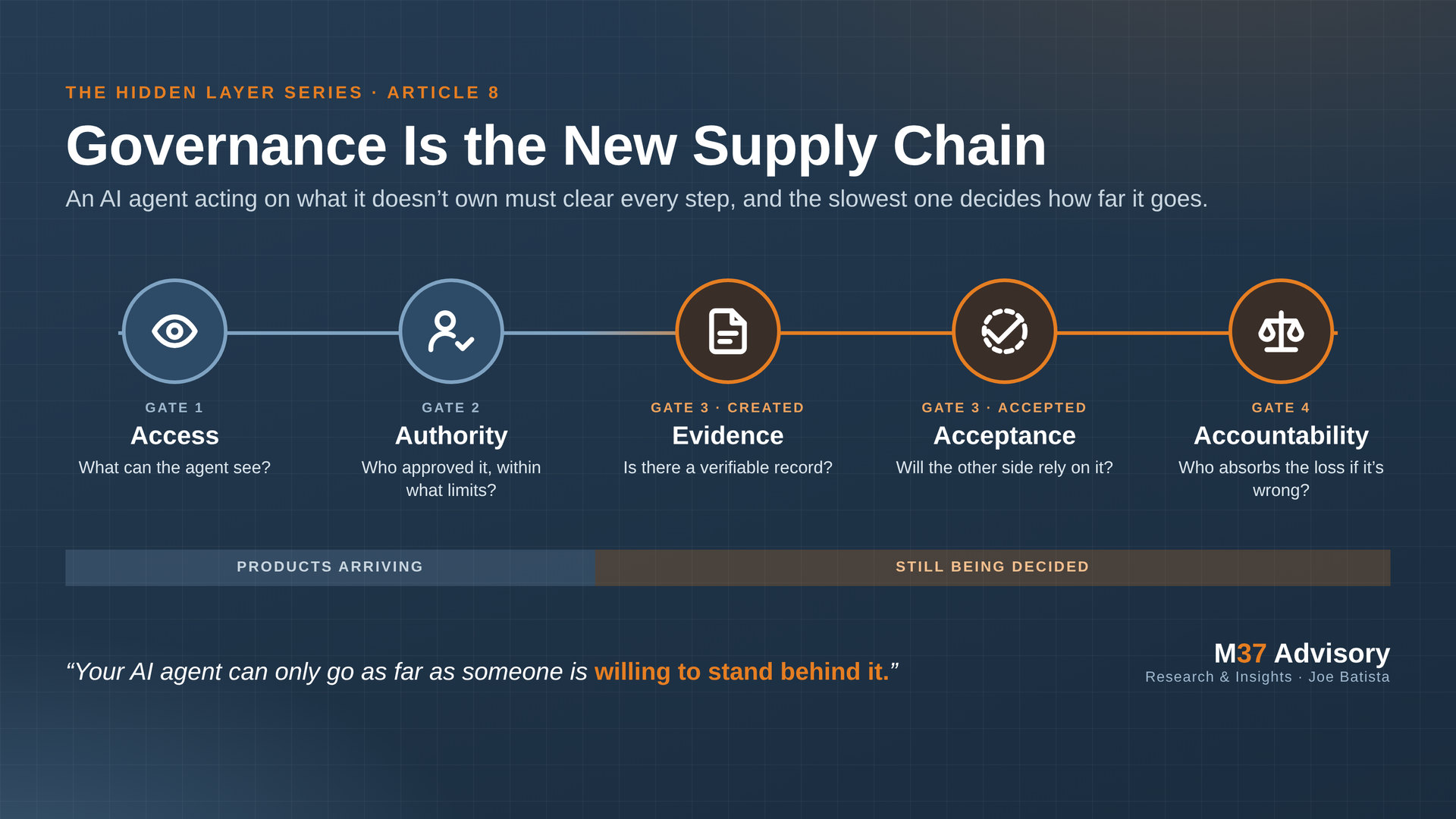
Governance Is the New Supply Chain Your AI agent can only go as far as someone is willing to stand behind it.
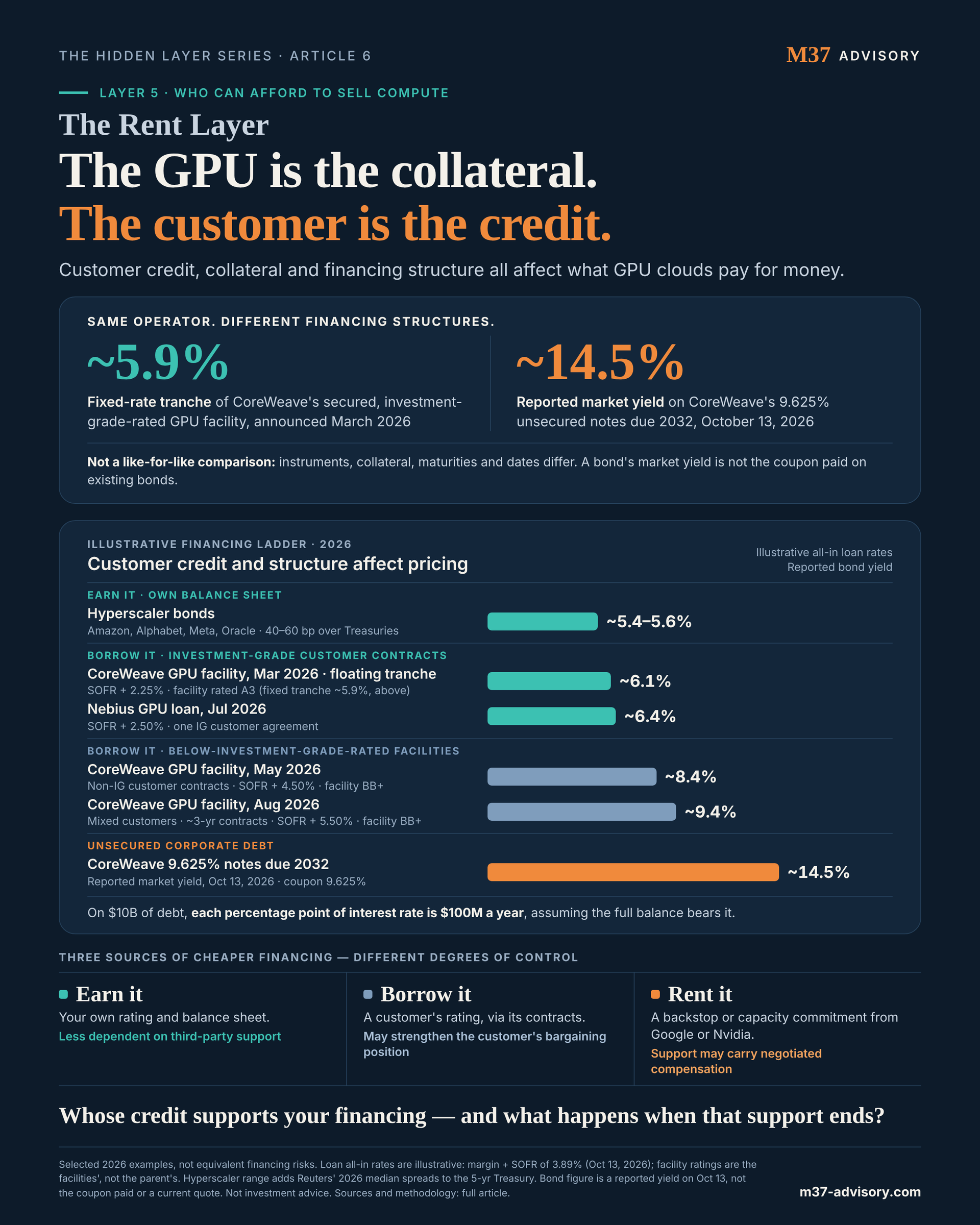
The GPU is the collateral. The customer is the credit. Two GPU clouds can rent out similar hardware and still have very different economics. One reason: the cost of the money used to buy the GPUs.
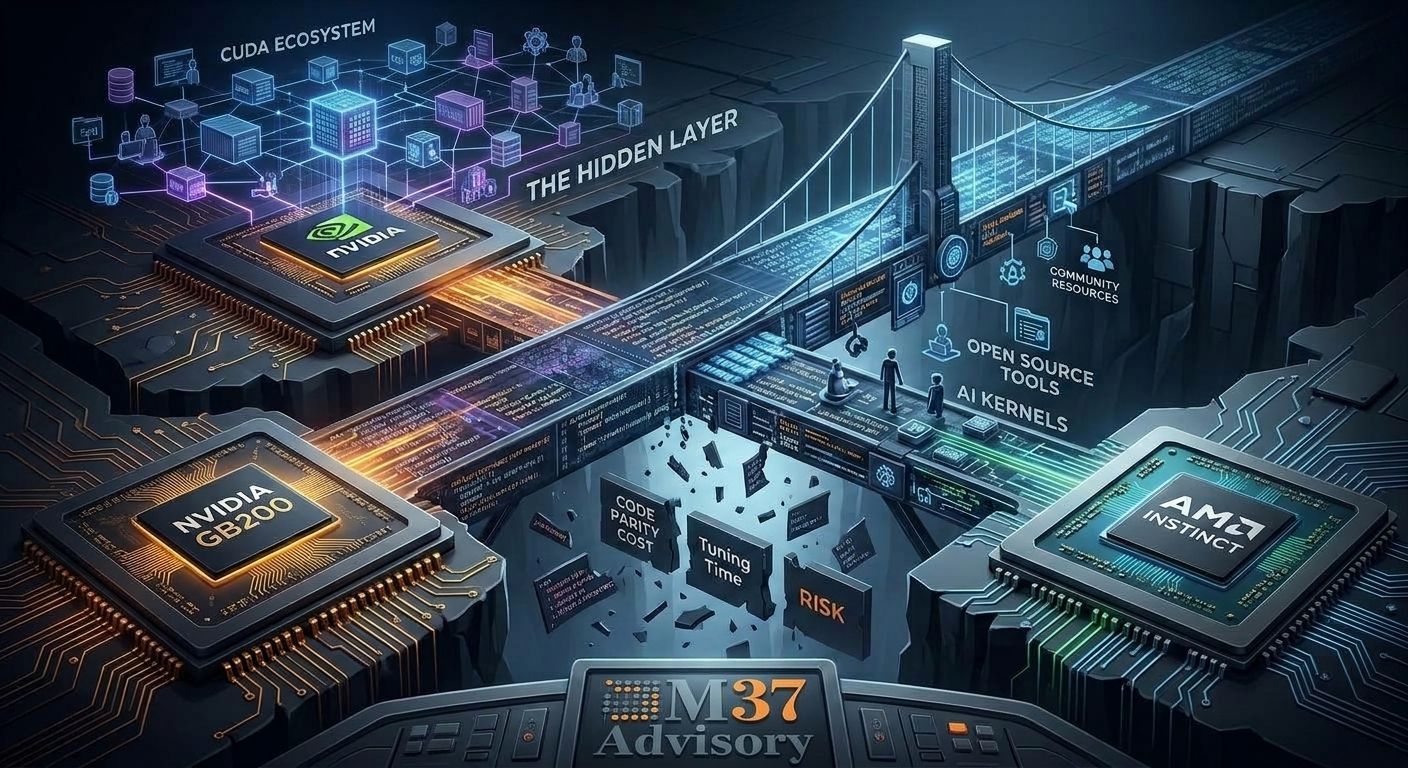
The Layer Above You: What It Costs to Leave CUDA Accelerator Design and CUDA ecosystem lock-in, and what it takes to move your work elsewhere
